Standings and Scoring
Learn how slowpitch.love calculates league standings, customize your ranking rules, and compare scoring formats.
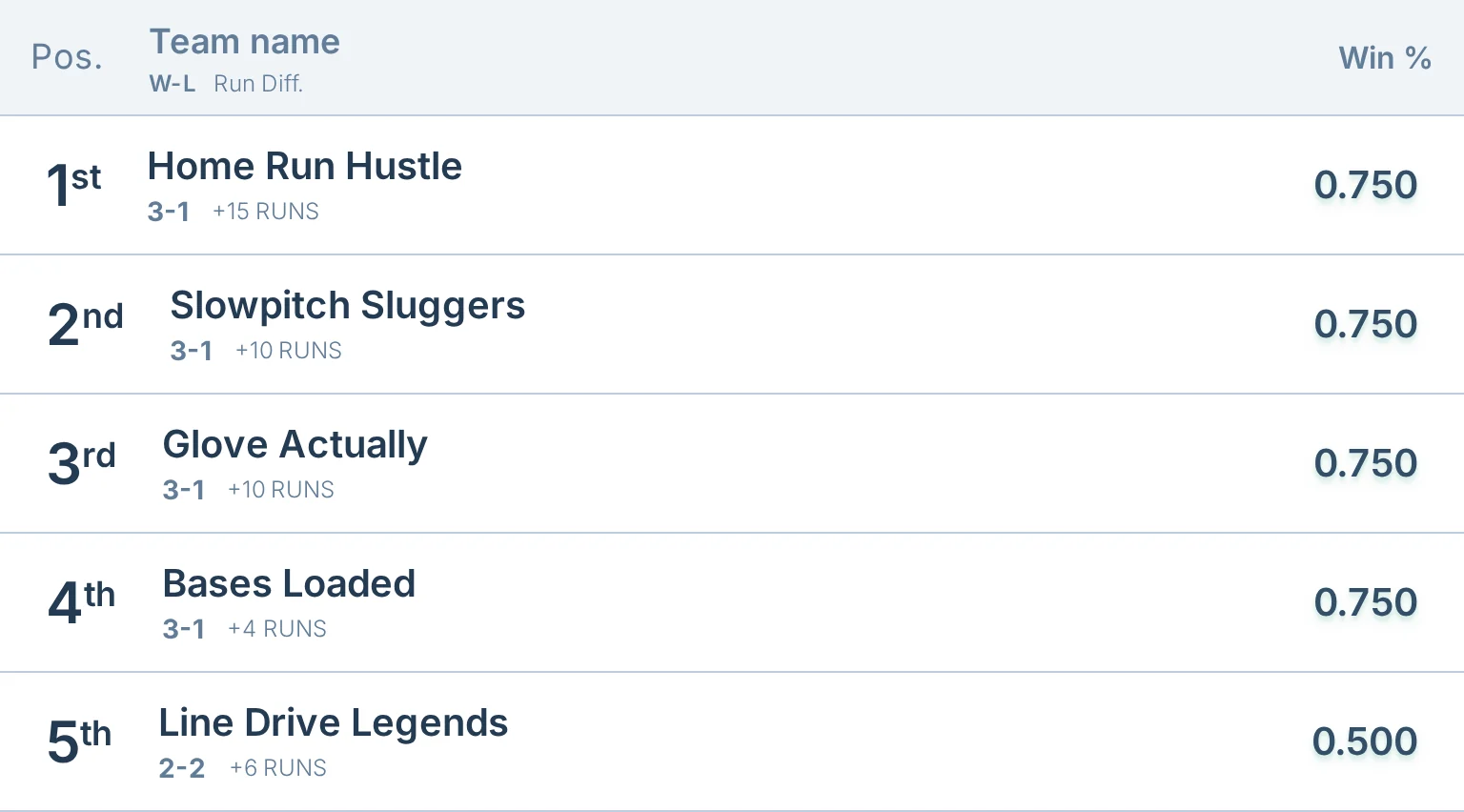
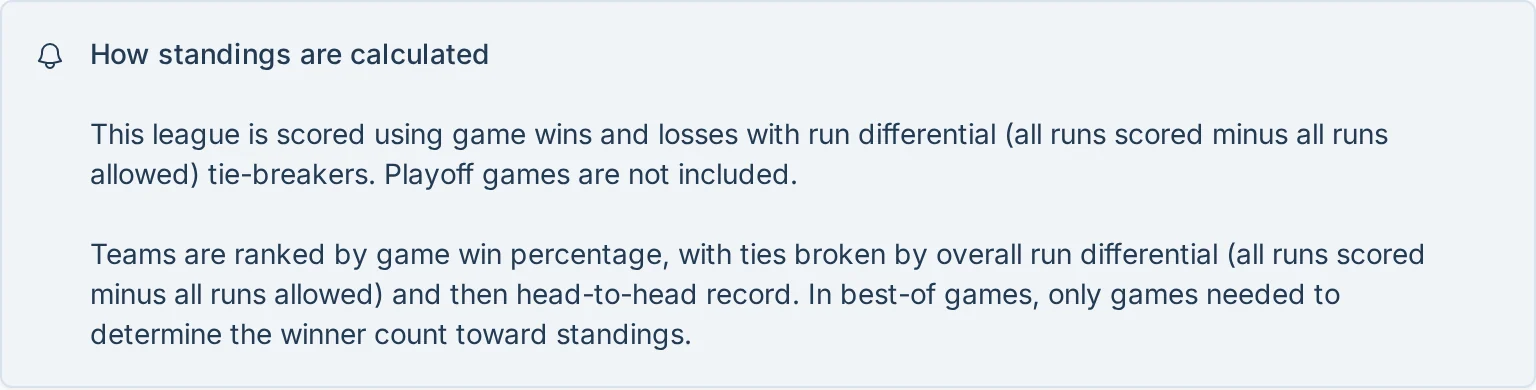
slowpitch.love updates league standings automatically as players report results from the schedule or team dashboard. Open Standings to see the current order and How standings are calculated below the table to see your league's rules.
Customize Your League Standings
For win/loss leagues, managers can choose which rules matter and put them in any order.
- Under How standings are calculated, select Customize ranking.
- Add or remove rules. Use the arrows to put the most important rule first.
- Select Save ranking. Existing results are ranked using the new order.
Each rule only compares teams still tied after the rules above it. Reset to default restores the suggested rules in your draft; save to apply them.
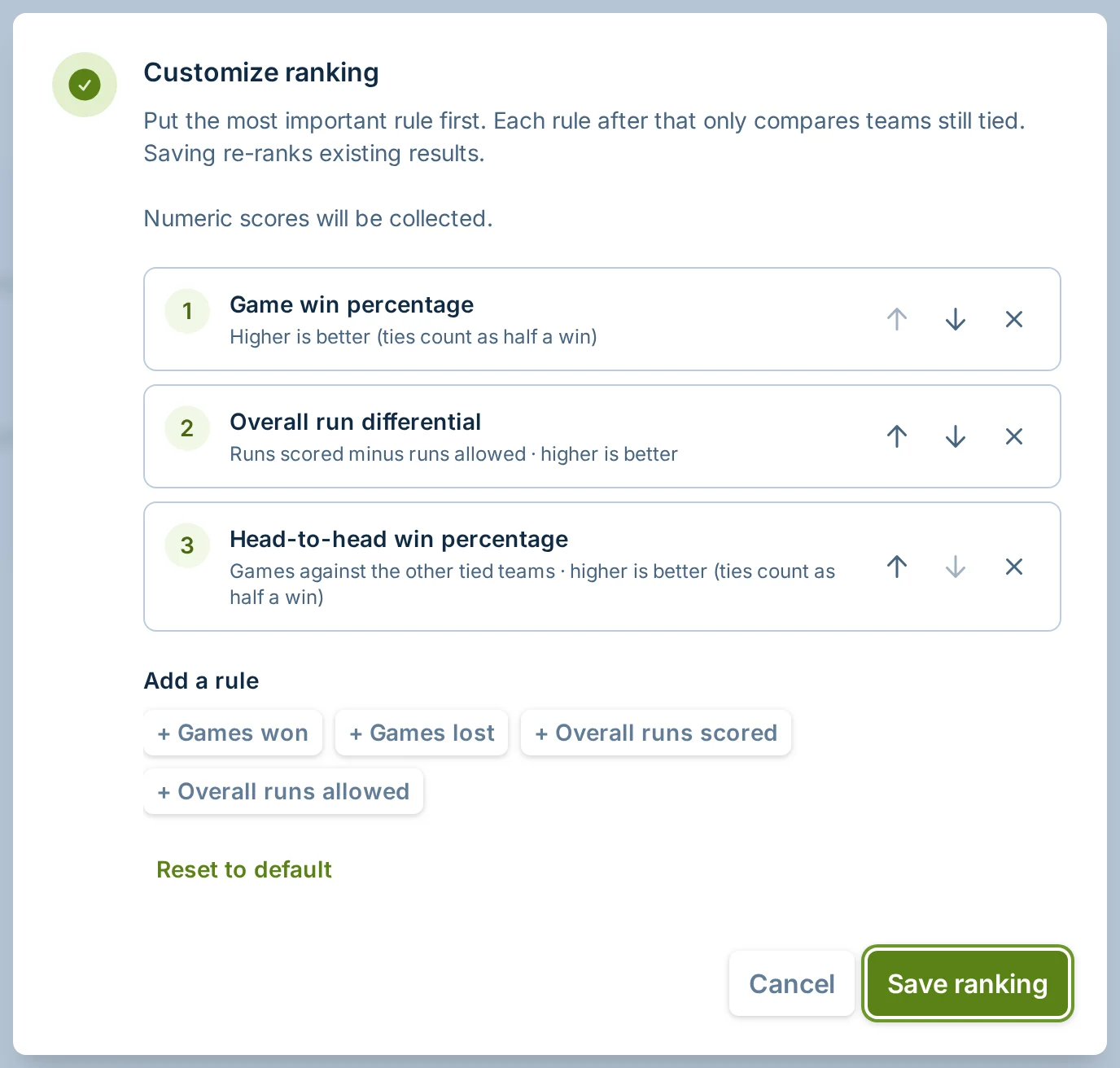
New win/loss leagues start with game win percentage, overall run differential, then head-to-head. Copying a past league carries over its standings settings.
Ranking Rules and Tie-Breakers
- Game win percentage: wins divided by games played. Higher is better. Three wins out of four is
0.750. Ties count as half a win when your league allows them. - Head-to-head win percentage: results against the other teams still tied.
- Games won or lost: more wins or fewer losses rank higher.
- Overall run differential: runs scored minus runs allowed. Higher is better.
- Overall runs scored or allowed: more scored or fewer allowed rank higher.
Score Entry and Limits
Remove all score-based rules to report results without entering numeric scores. Once results have been recorded without scores, score-based rules may be unavailable. The editor warns you before making this change.
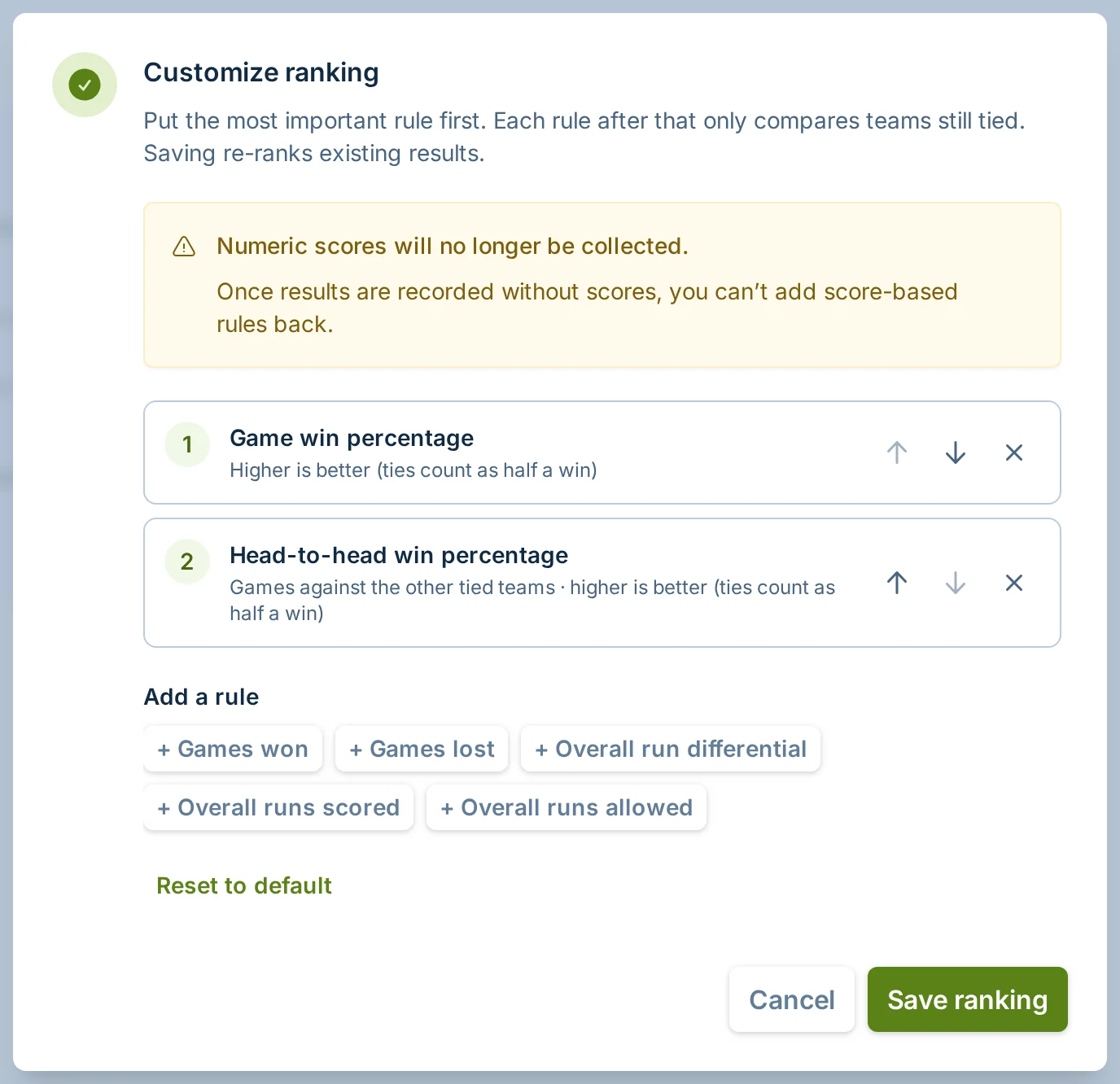
Ranking changes are unavailable once playoffs are seeded. For a different standings format or an unusual correction, contact support.
Why Is a Team in This Position?
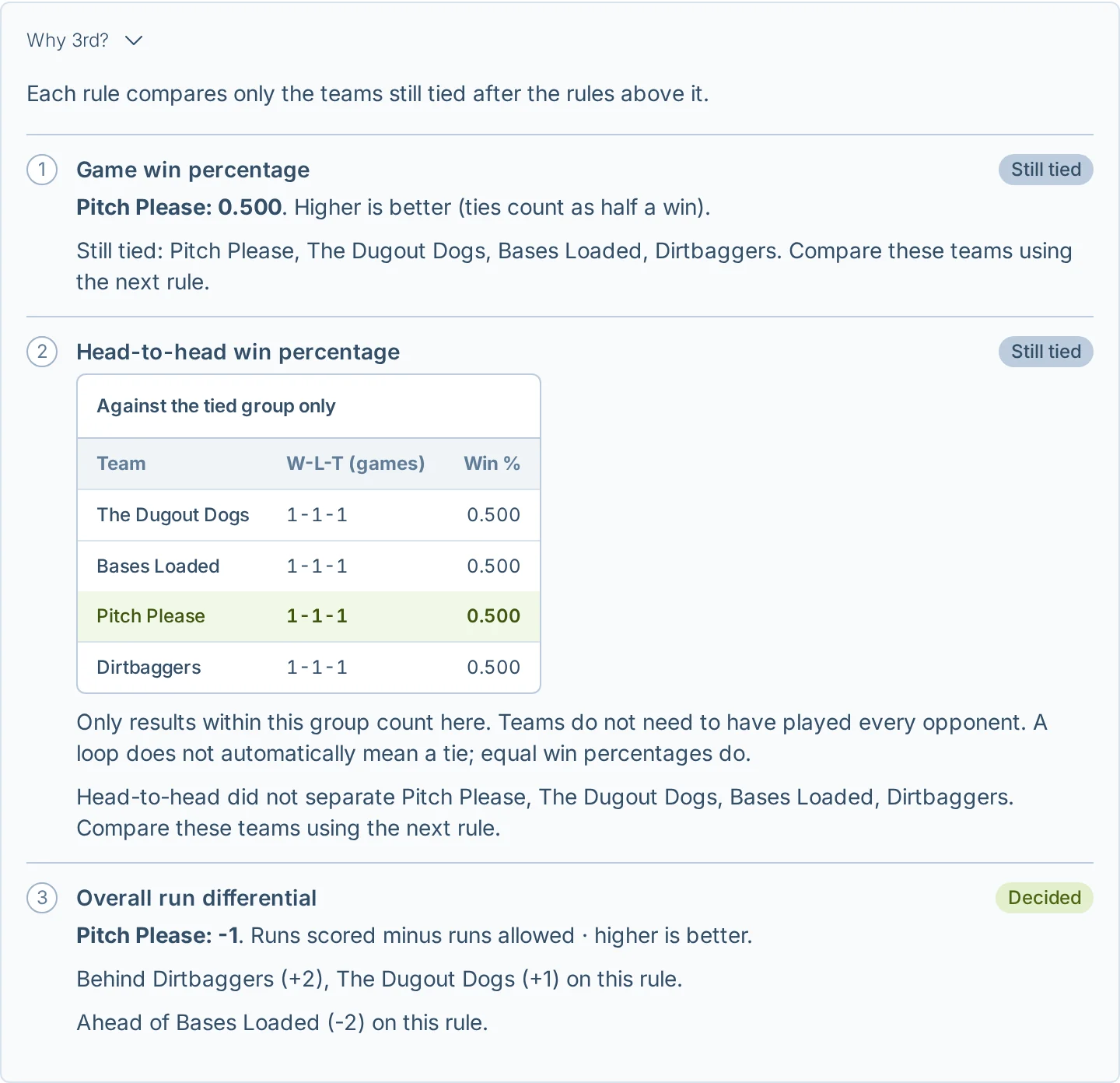
Expand a team's row, then open Why this position? (shown as Why 3rd?, for example). It walks through the rules that decided that team's place.
Head-to-Head Tie-Breakers
Head-to-head uses only results between the teams still tied. They do not need to have played every opponent, but each team needs a result against someone in that group. Otherwise, that rule is skipped.
If teams have beaten each other in a loop, their head-to-head win percentages decide whether they are still tied. Equal percentages move on to the next rule. If no rule separates teams, they share a position.
If a position looks wrong, check the underlying scores first. Correcting a result updates the standings automatically. See Score Reporting. Managers cannot override positions directly; if the scores are correct, contact support with the league and teams involved.
What Counts Toward Standings
Regular-season results count toward standings; playoff results stay in the bracket. Canceled and unplayed games do not count. Forfeits count as wins and losses.
For best-of games, only the games needed to decide the winner count. Extra games played after the winner is decided do not affect standings.
If playoffs are waiting on standings, report or cancel every regular-season game that affects the rankings so slowpitch.love can fill the bracket.
Other Standings Formats
These formats keep their own ranking rules, shown under How standings are calculated. Contact support to use a different format.
- Points per place: Earn standings points for your finish in each game. Ties use points earned by your own players, then finishes by place. Some leagues track substitute points separately.
- Standings points per win: Earn one standings point per game won. In an even-game game, the better run differential earns a bonus point; equal differentials split it. Ties in standings use head-to-head, wins, losses, then overall run differential.